Commercial Brine Pvt Heat Pump Rooftop Installation Solis Pvt 1
Slide 1
PVT Collectors for Ground Source Heat Pumps
Image is not available

Generate Solar Electricity and Renewable Heat from a Single Collector. Designed for GSHP, Borehole Regeneration and Low-Temperature Heating Applications.

previous arrowprevious arrow
next arrownext arrow

Why Solis PVT

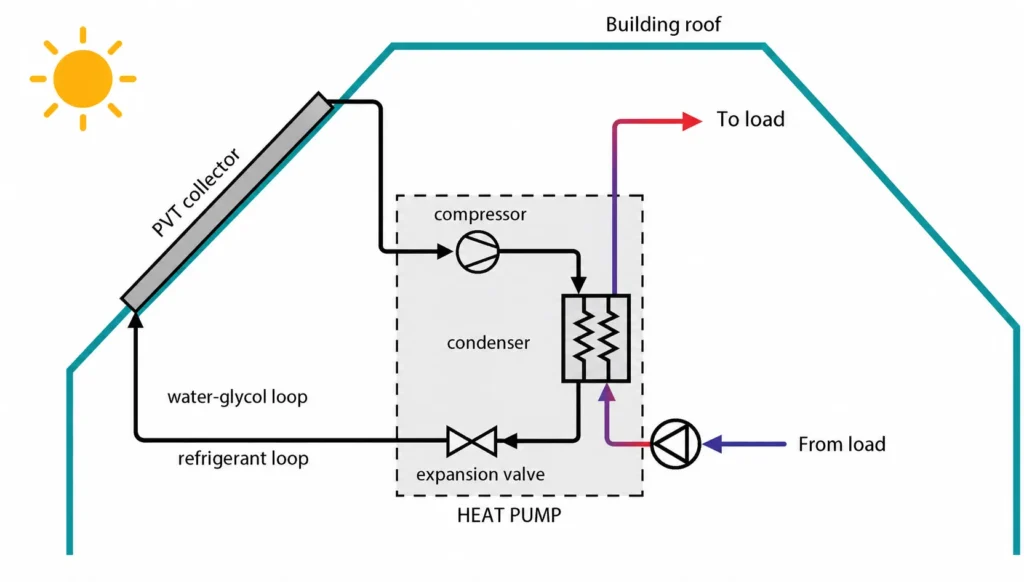
Diagram showing how a PVT collector generates electricity and recovers thermal energy for heat pump integration

Solis PVT focuses on practical PVT solutions for heat pumps rather than laboratory concepts. Our collectors are designed for:

  • Ground Source Heat Pumps
  • Borehole Regeneration
  • Heat Pump Retrofits
  • Solar-Assisted Heating
  • Commercial Renewable Heating

Trusted by Heat Pump Professionals:

  • Installers
  • Distributors
  • Developers
  • Energy Consultants
  • OEM Partners

≥ 86.5%
Combined Solar Utilization

Flat-plate absorber optimised for low-temperature operation — the brine heat pumps operate in most efficiently.

+5–8%
Higher PV Yield Through Cell Cooling

Continuous cell cooling through the rear absorber reduces operating temperature, improving PV output compared to standard modules in the same area.

18~30%
Potential Borehole Reduction

In GSHP systems, PVT-assisted ground regeneration reduces borehole requirements — published field studies demonstrate 25–35% reductions in drilling depth.

25 years
Linear power warranty

Standard PV module performance guarantee applies. Absorber circuit rated for pressure compatibility with standard brine heat pump circuits

Diagram illustrating how a PVT collector functions as both a photovoltaic module and heat pump thermal source

Why Are Heat Pump Installers Choosing PVT?

Traditional PV systems only generate electricity. PVT collectors generate electricity while simultaneously recovering low-temperature thermal energy that can support heat pump operation.

A PVT system combines photovoltaic electricity generation with thermal energy collection in a single panel structure. In heat pump applications, the thermal side of the PVT collector can be used as a low-temperature energy source to support system operation throughout the year.

Unlike conventional PV modules that only generate electricity, PVT collectors can also contribute usable thermal energy for renewable heating systems. Depending on system configuration, PVT can support:

  • Ground source heat pumps
  • Solar-assisted heat pump systems
  • Borehole regeneration
  • Domestic hot water preheating
  • Hybrid renewable HVAC systems
  • Existing heat pump retrofit projects

Brine PVT

PVT for Ground Source Heat Pumps, Low-Temperature Heat Source, Retrofit for Existing Heat Pump Systems,

Direct Expansion PVT

Refrigerant-based thermal collection Compact thermal transfer structure Integrated solar-assisted HVAC concepts

How a PVT System Works with a Heat Pump

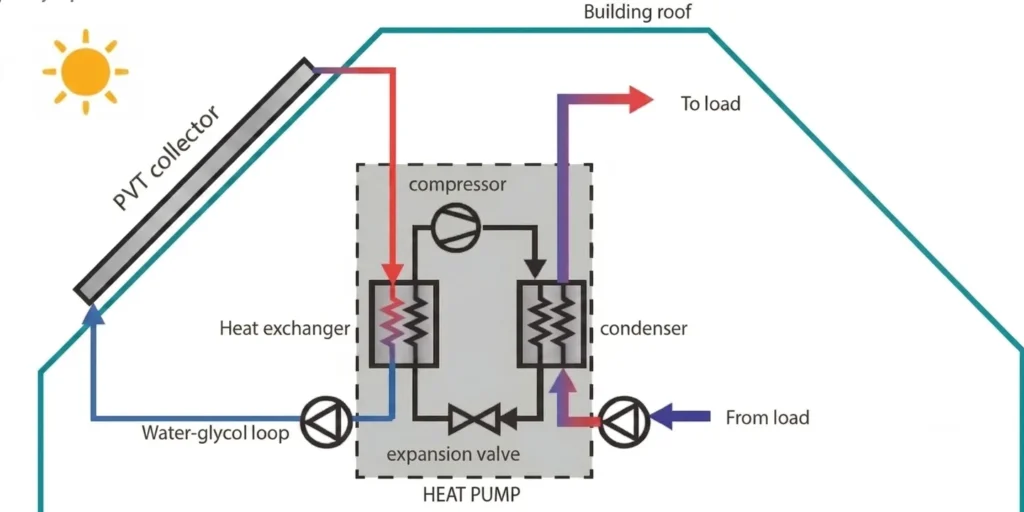
A PVT collector functions simultaneously as a photovoltaic module and a low-temperature heat exchanger. The rear absorber plate — in direct thermal contact with the PV cells — circulates a water-glycol mixture that collects both solar irradiation and ambient air heat.

This brine circuit connects directly to the evaporator inlet of a standard brine-to-water heat pump, raising the heat pump’s inlet temperature and improving its seasonal performance factor (SPF) compared to ground-only or air-source configurations. The PV cells benefit from continuous cooling, maintaining lower operating temperatures and higher electrical output year-round.

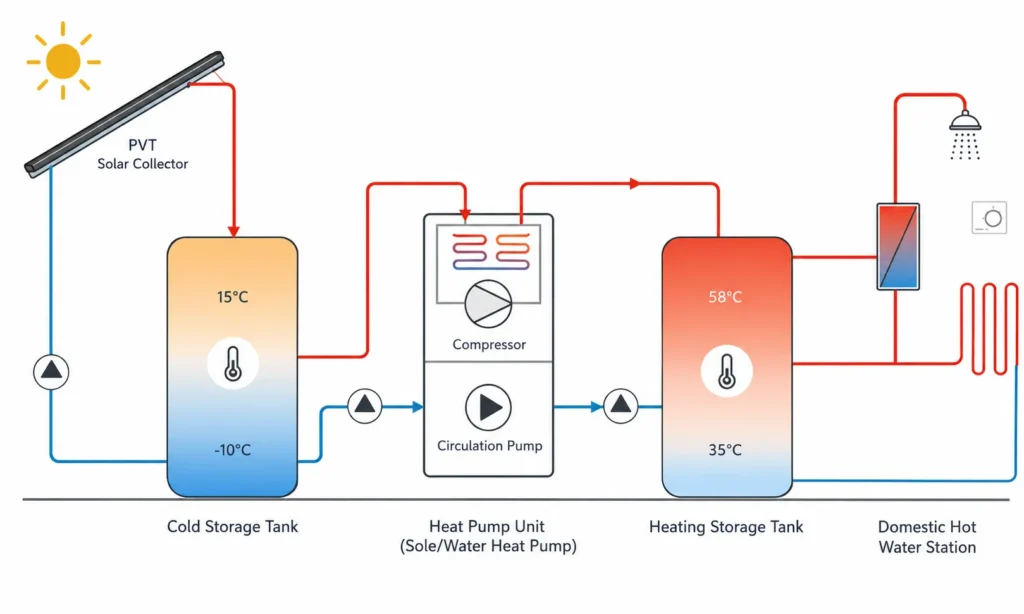
System components in a standard indirect configuration:

PVT collectors — mounted on roof or ground, generating electricity and low-grade heat simultaneously

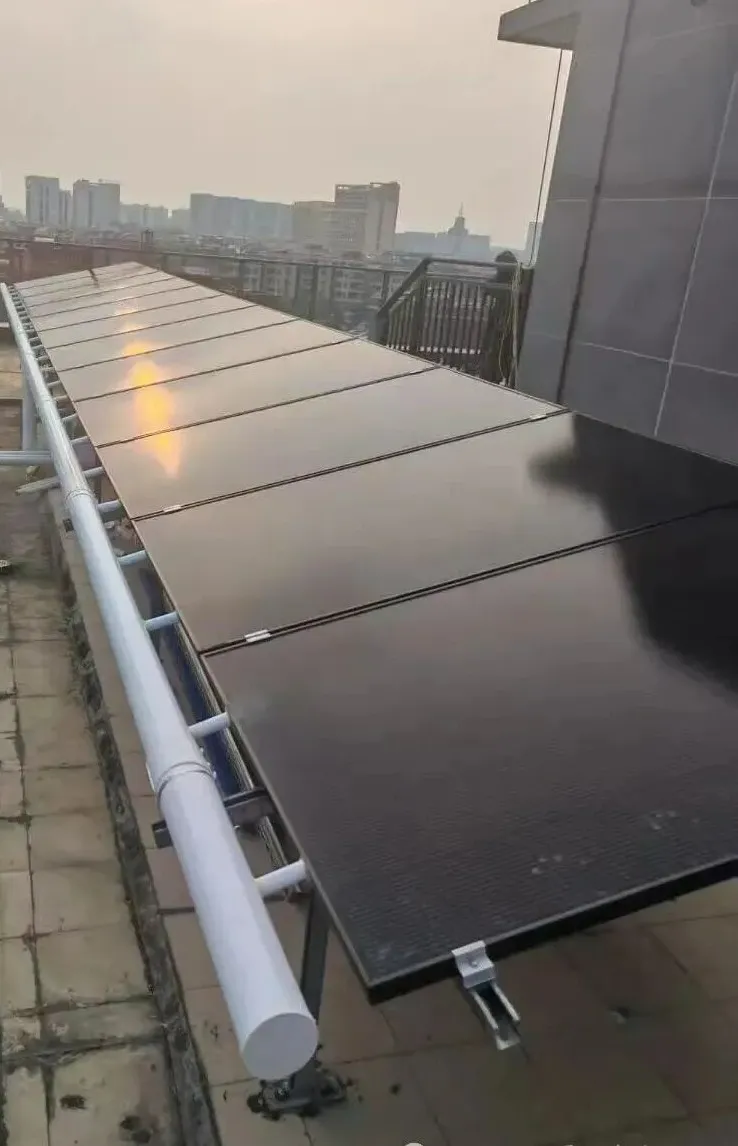
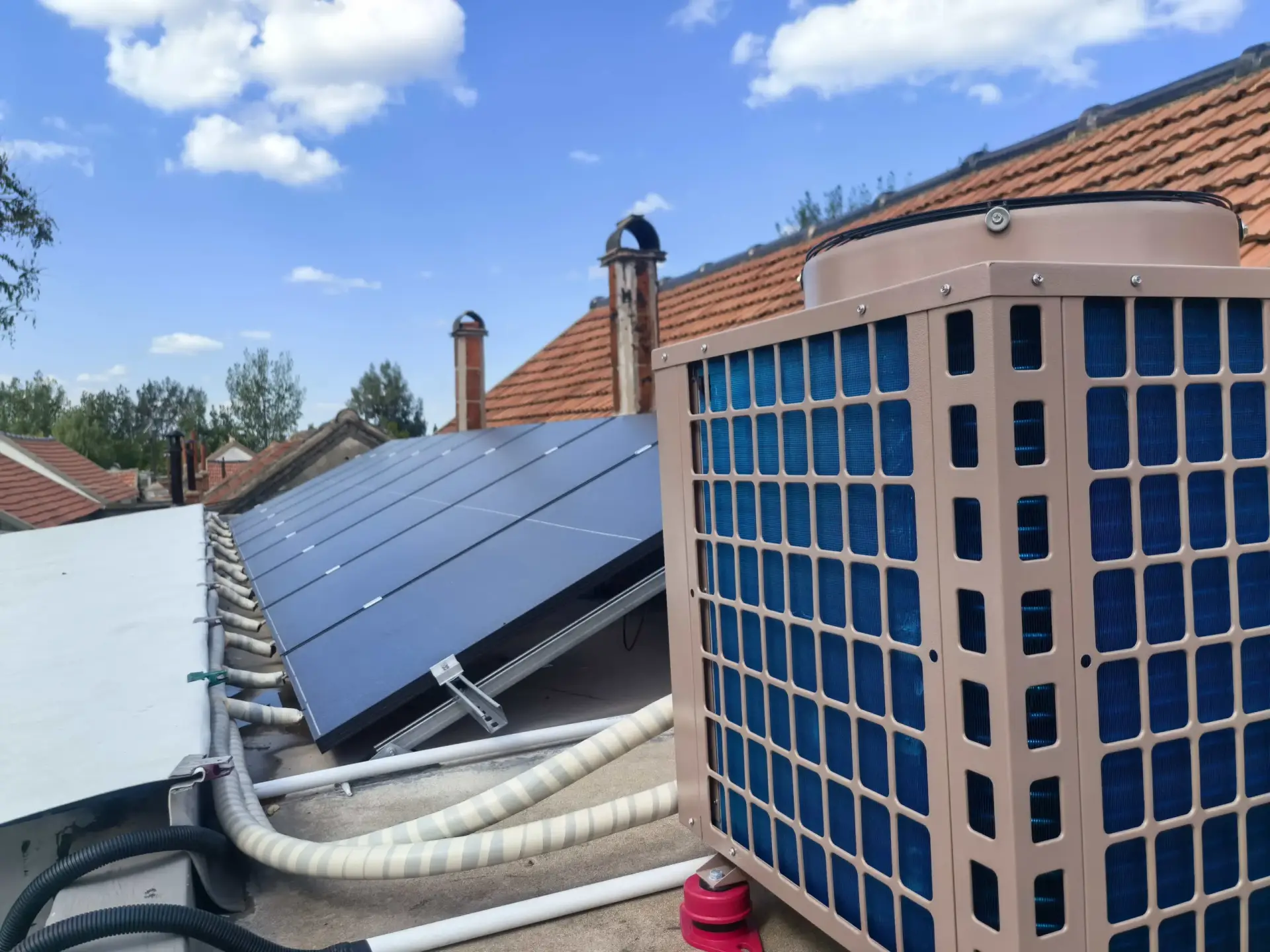
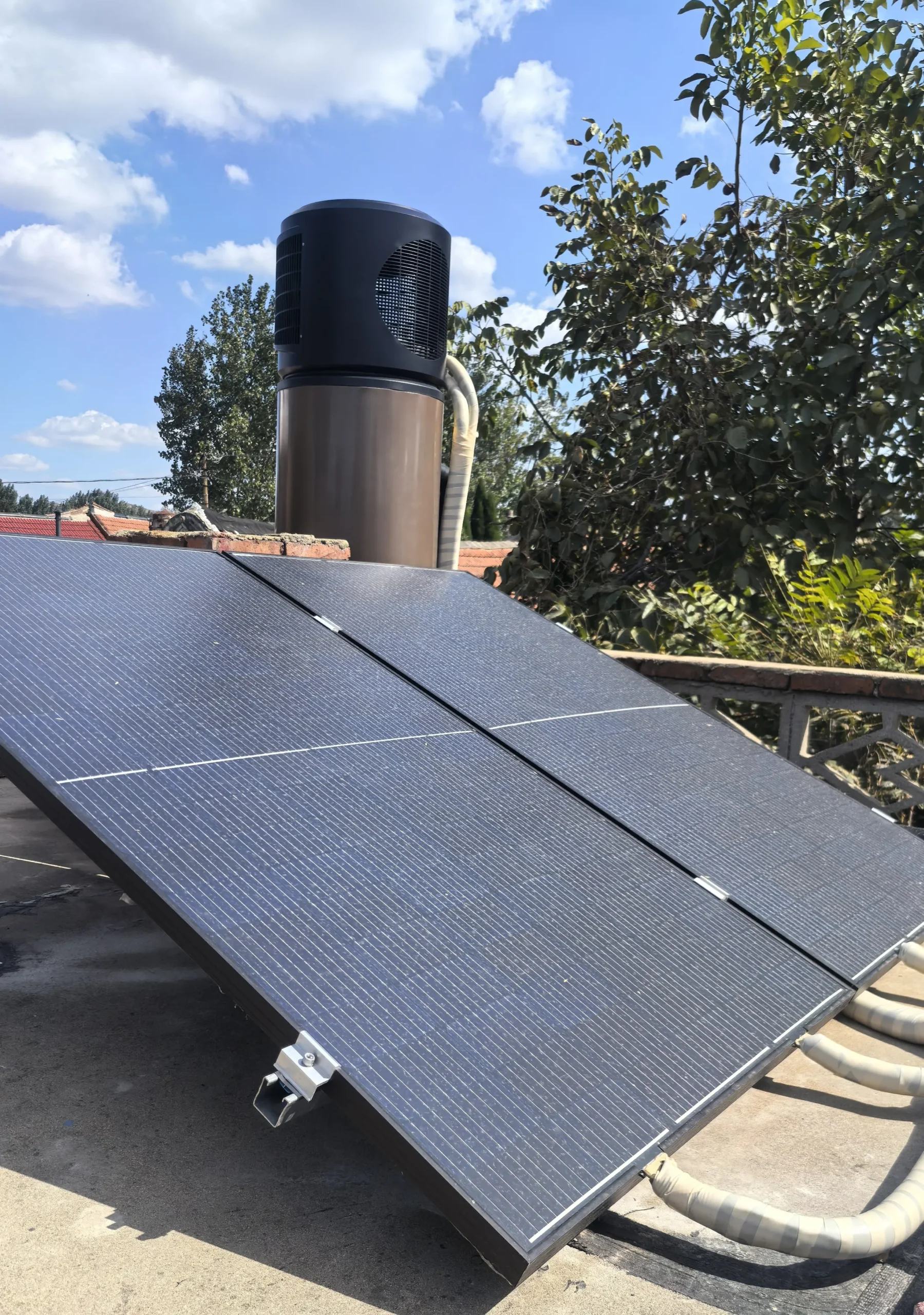
Residential brine-loop PVT collectors mounted on a rooftop, connected to a heat pump system for hot water and space heating

Brine circulation loop — water-glycol mix, typically 25–35% concentration for frost protection to −15°C

Brine-to-water heat pump — standard European models (Vaillant, NIBE, Viessmann, alpha innotec compatible)

Buffer / stratification tank — thermal storage for space heating and DHW circuits

Distribution system — underfloor heating (35–45°C) or low-temperature radiators

Residential brine-loop PVT collectors mounted on a rooftop, connected to a heat pump system for hot water and space heating

Why Use PVT as a Heat Pump Source?

Dual Energy Output

Generate electricity and collect usable thermal energy simultaneously from the same roof area.

Roof Space Optimization

Combine photovoltaic and thermal collection functions within a single collector footprint.

Low-Temperature Thermal Support

Provide renewable low-temperature energy for heat pump-related applications.

Borehole Regeneration Potential

Support seasonal thermal balancing in ground source heat pump systems.

Renewable Heating Integration

Suitable for hybrid renewable heating concepts and solar-assisted HVAC systems.

Retrofit Flexibility

Can be integrated into selected retrofit and existing heating projects.
Direct Expansion PVT Systems

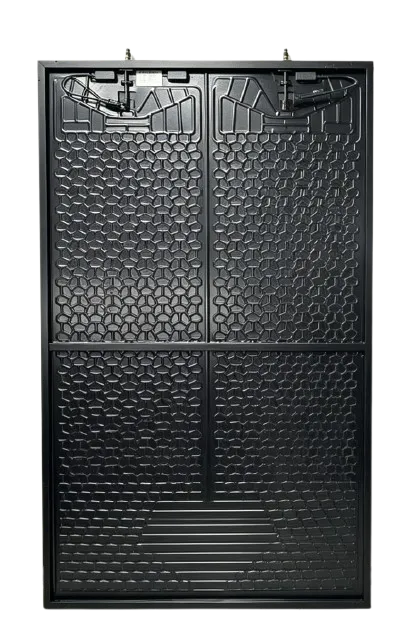
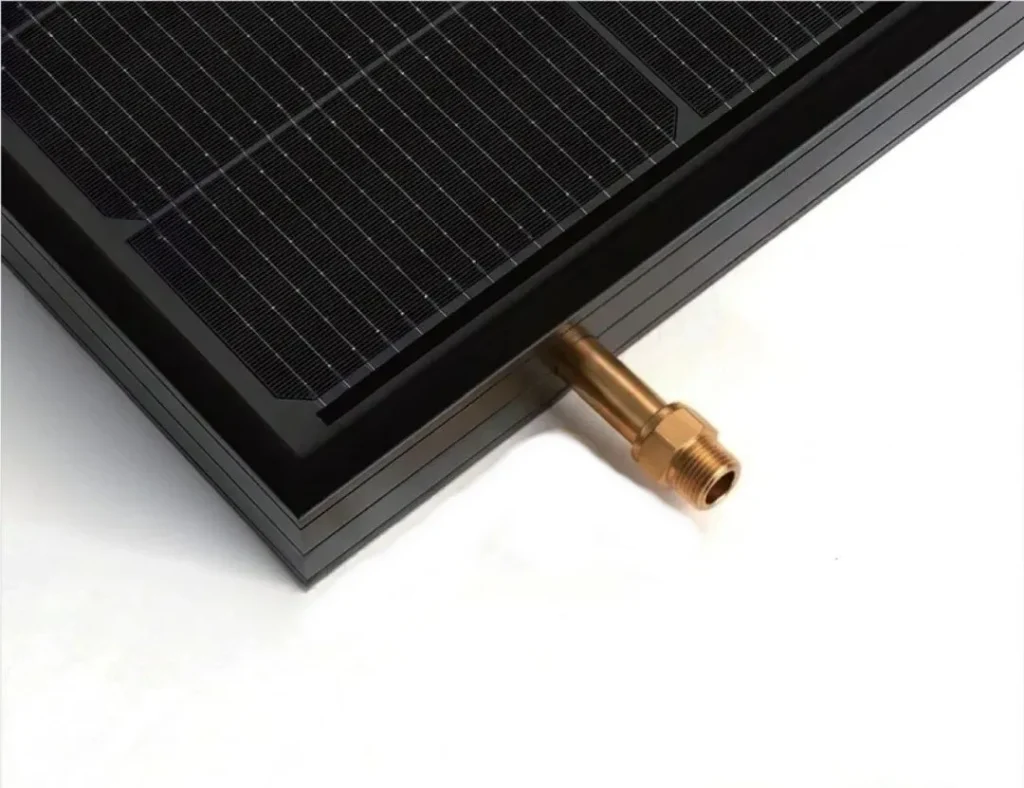
Direct expansion PVT module structure showing refrigerant-based thermal collection behind the photovoltaic surface

What Is Direct Expansion PVT?

Direct expansion PVT systems use refrigerant-based thermal collection technology integrated behind the photovoltaic module structure.

These systems are typically explored for:

  • Compact solar-assisted HVAC concepts
  • Refrigerant-based thermal transfer
  • Integrated heat pump applications
  • High thermal transfer efficiency concepts

Direct expansion PVT can be considered for specialized renewable heating and cooling system designs where compact integration is important.

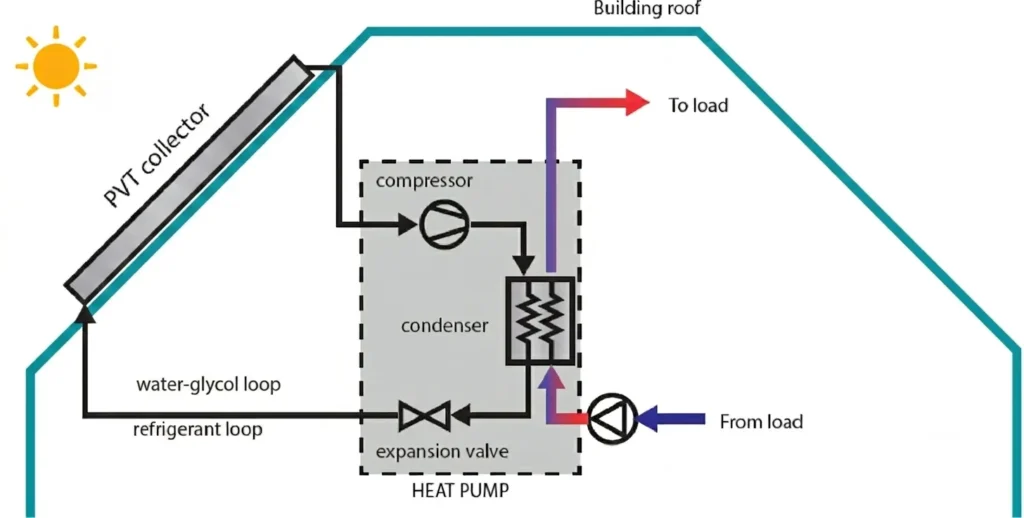
Direct Expansion (DX) PVT systems transfer solar heat directly into the refrigerant circuit. Compared with indirect brine systems, DX technology reduces thermal losses and simplifies hydraulic design.

Why Direct Expansion PVT?

Direct Expansion PVT transfers solar energy directly into the refrigerant circuit.

Compared with conventional brine systems, DX PVT reduces thermal losses, simplifies hydraulic design and enables compact heat pump integration.

PVT Solutions for Heat Pumps and Renewable Heating

Explore collector technologies, heat pump integrations and commercial renewable heating applications.
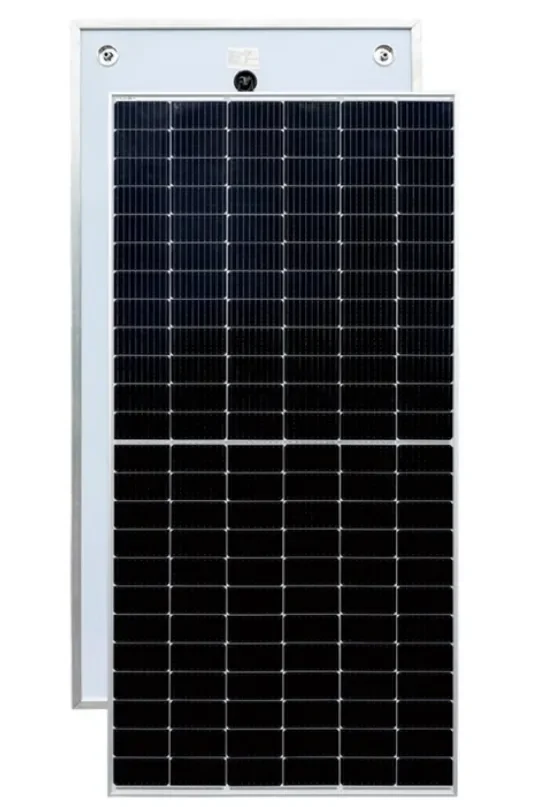
Solis brine PVT collector with glycol-brine heat exchanger designed for ground source heat pumps, borehole regeneration and renewable heating applications.
Brine PVT Collector
PVT Collector — Brine Loop, absorber with glycol-brine circuit. Designed for brine-to-water heat pump integration.
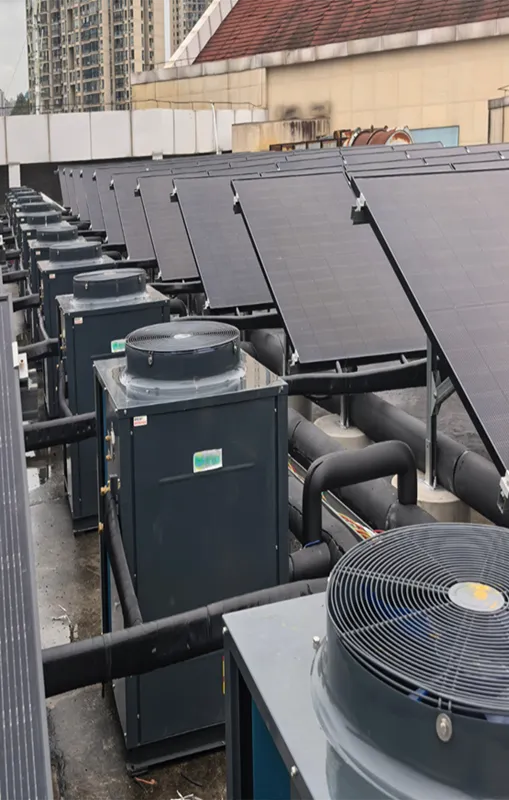
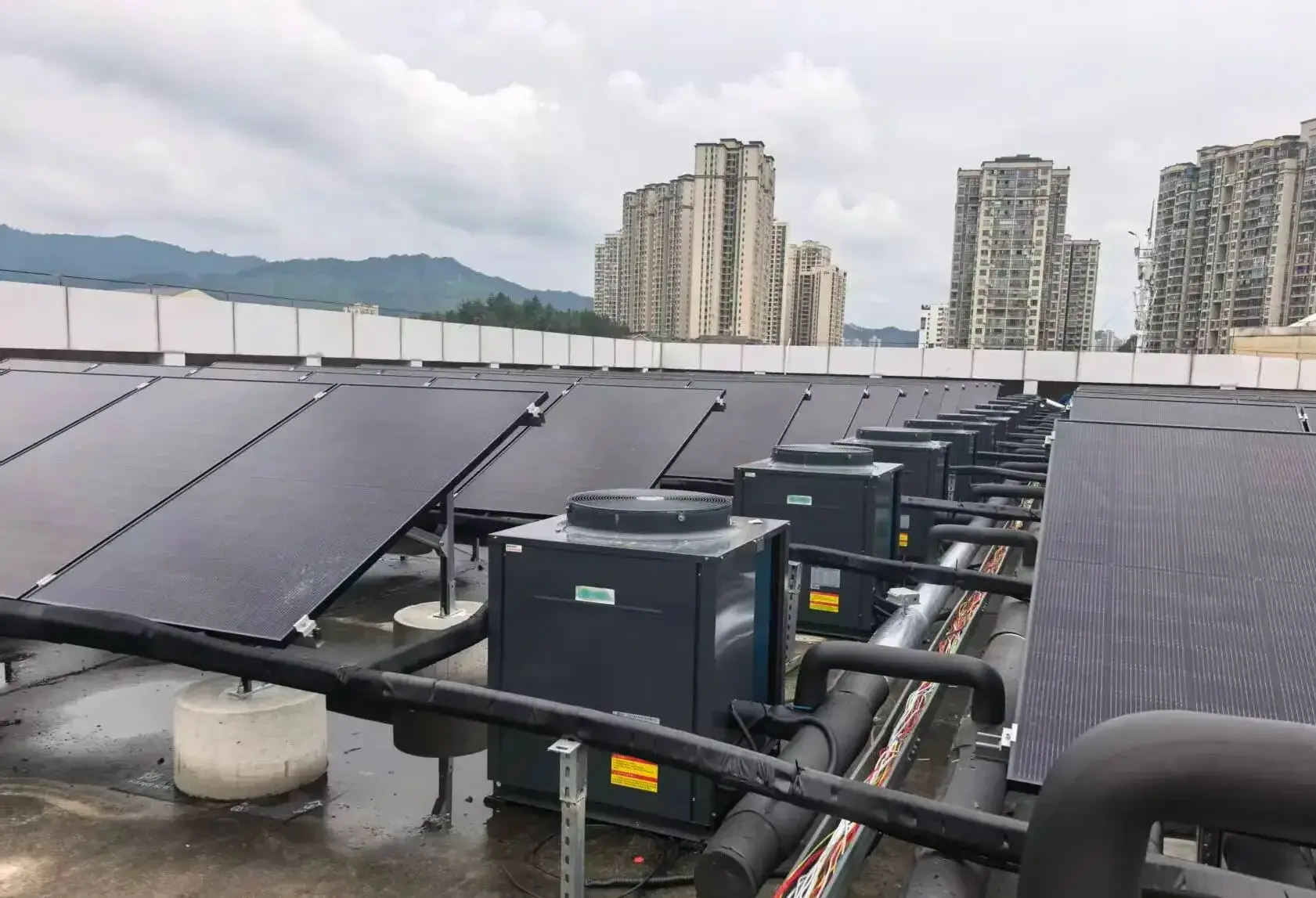
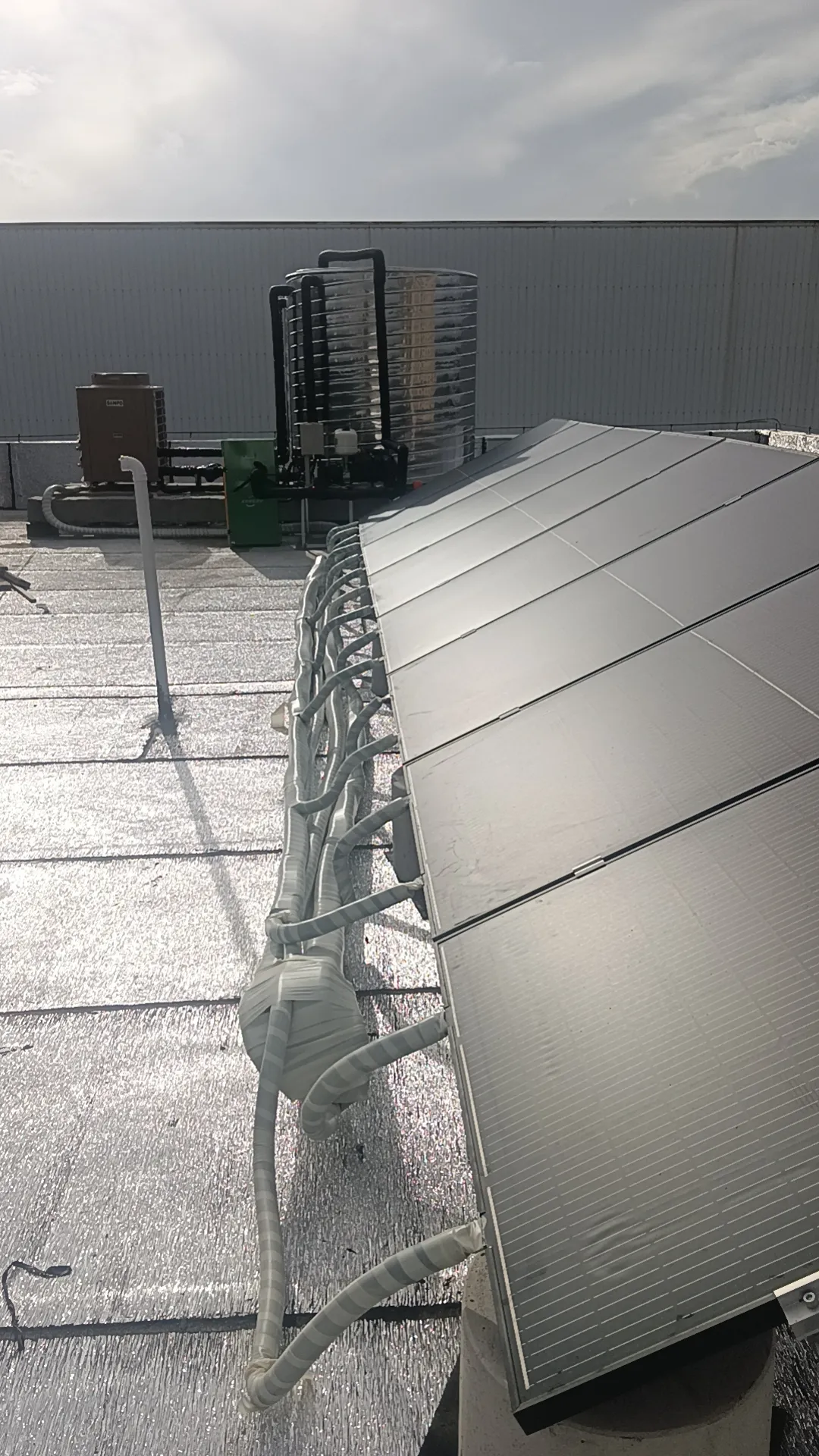
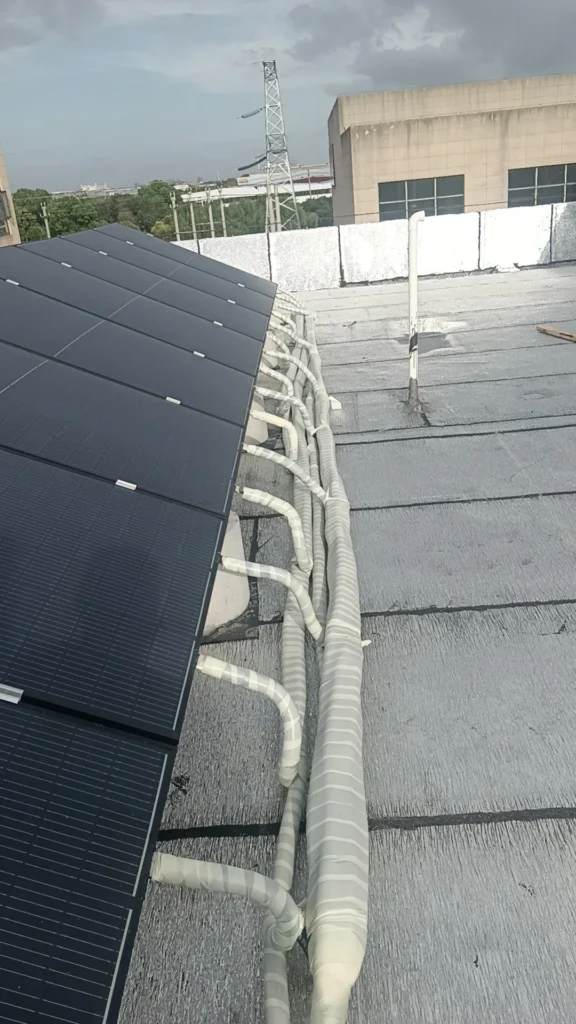
Large-scale brine PVT collector installation integrated with heat pumps on a multi-family residential building for renewable heating and cooling.
Direct Expansion PVT
Direct refrigerant-based PVT collectors providing efficient solar energy recovery for residential heating, domestic hot water and compact heat pump systems.
Solis direct expansion PVT collectors connected to a refrigerant-based heat pump system for residential heating and domestic hot water production.
Heat Pump Solutions
Integrated solutions for ground source, brine-to-water and air source heat pumps designed to improve efficiency and reduce operating costs.
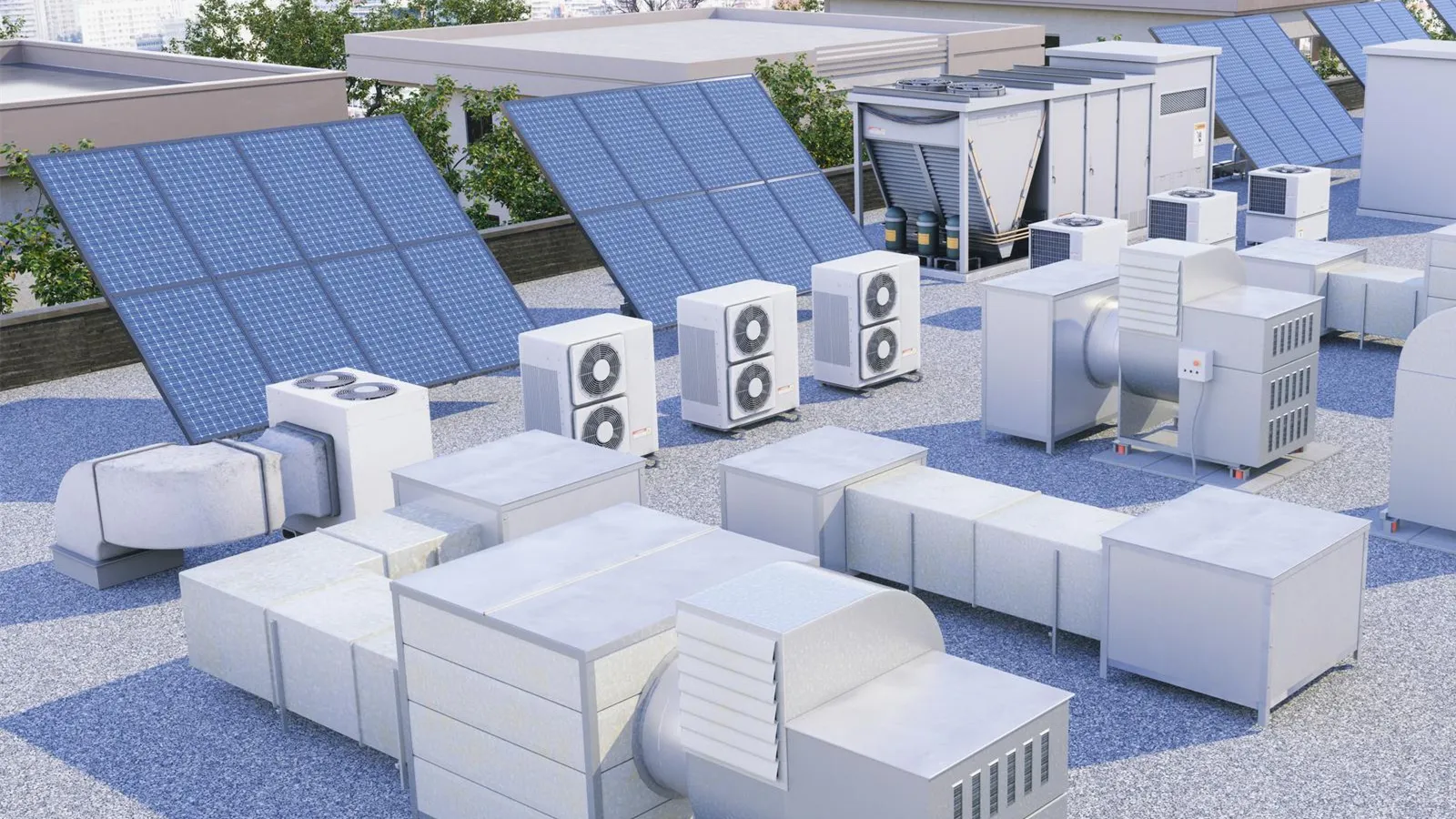
Large-array PVT collector installation for a commercial multi-family building project
Commercial Applications
Large-scale PVT installations for hotels, apartment buildings, schools, hospitals and industrial renewable heating projects.

How PVT Integrates with Different Heat Pump Systems

PVT Collectors for Ground Source Heat Pump Systems

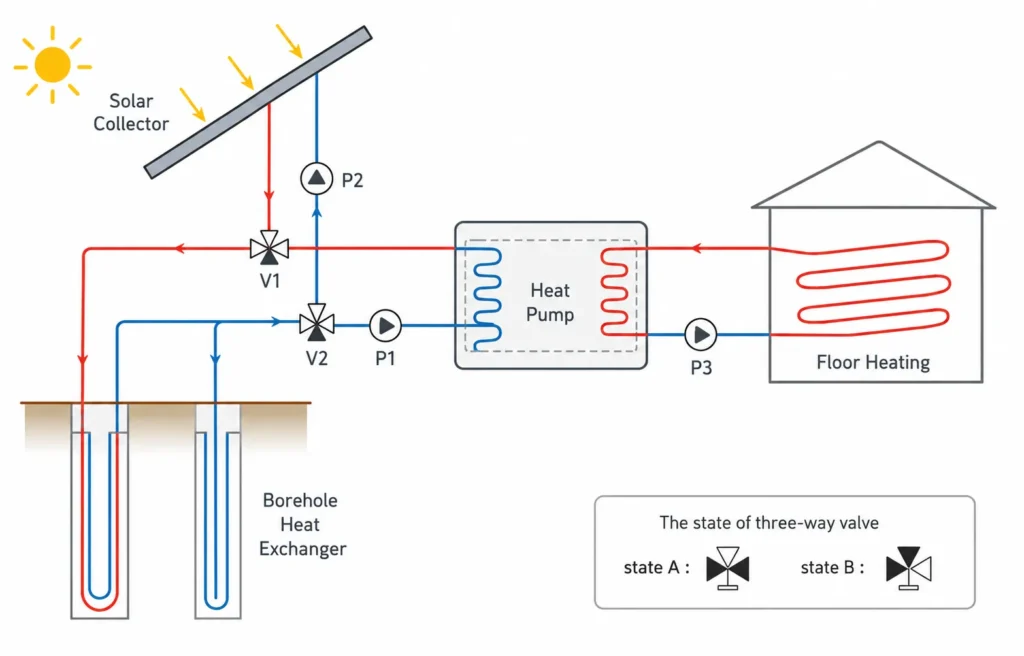
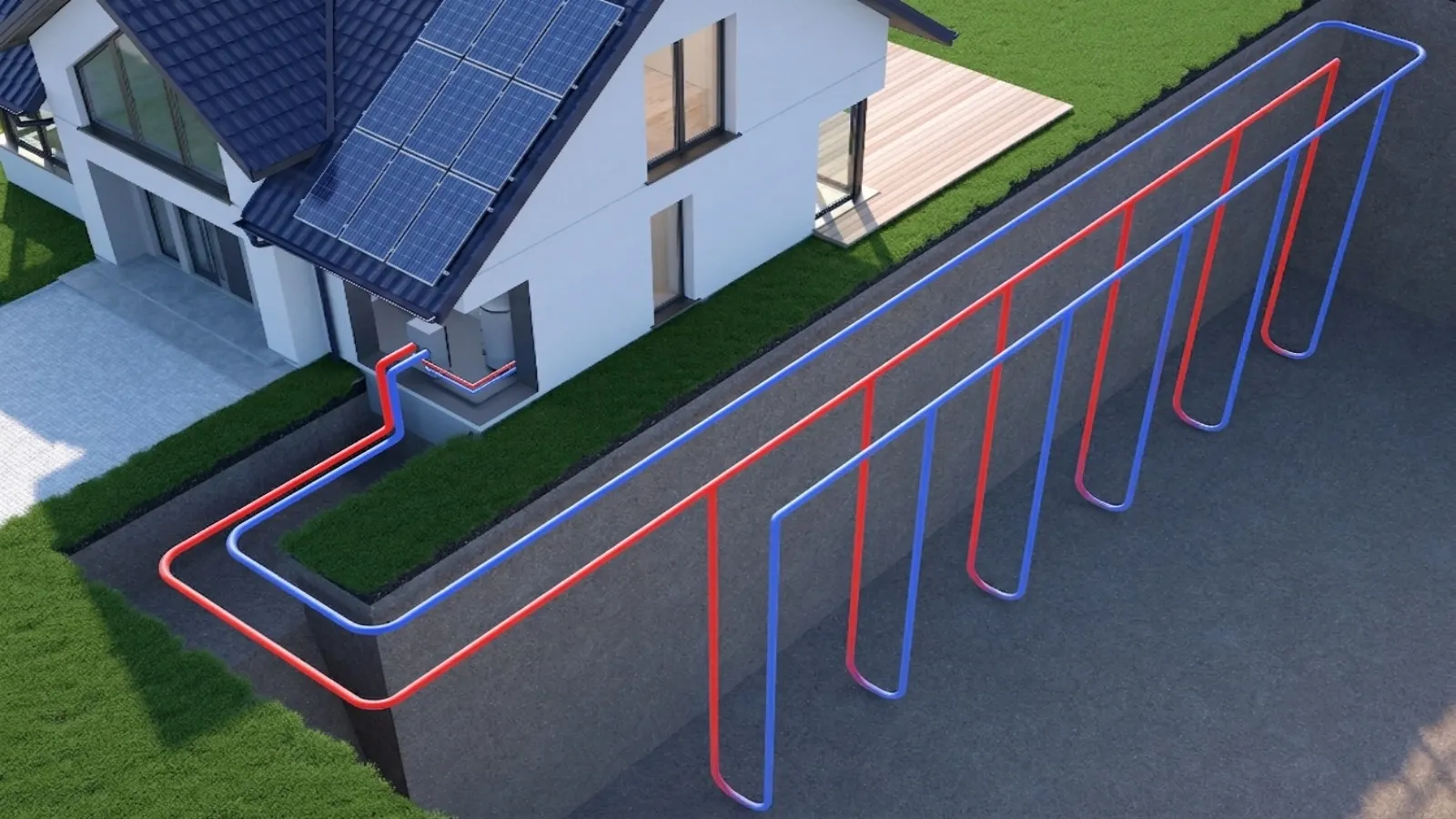
In closed-loop GSHP systems, ground temperature around boreholes gradually declines over successive heating seasons without active regeneration. PVT collectors address this through their brine circuit: during spring, summer, and mild autumn periods, low-grade heat collected by the rear absorber is directed back into the ground via the borehole heat exchanger, restoring thermal balance before the next heating season begins.

This active regeneration approach maintains borehole temperatures above the system’s design minimum, supporting heat pump COP throughout the heating season. In new installations, this can allow a reduction in borehole drilling length, lowering ground loop installation costs.

Diagram of a dual-source system combining PVT and geothermal heat exchanger on a shared water circuit

Applications include:

  • Borehole Thermal Regeneration
  • New-Build GSHP Installations (Reduced Drilling Requirement)
  • Shallow Geothermal Systems
  • Seasonal Ground Temperature Balancing
  • Renewable Residential Heating Projects

PVT Collectors as a Brine-to-Water Heat Pump Source

A PVT collector functions simultaneously as a photovoltaic module and a low-temperature heat exchanger. The rear absorber plate, in direct thermal contact with the PV cells, circulates a water-glycol mixture that collects both solar irradiation and ambient heat. This brine circuit connects to the evaporator inlet of a standard brine-to-water heat pump via a plate heat exchanger, raising the heat pump’s source-side inlet temperature and supporting its seasonal performance factor (SPF) compared to ground-only or air-source configurations.

Unlike the ground source application above, this configuration does not require borehole infrastructure — the PVT array itself serves as the primary or supplementary brine-side heat source, making it suitable for sites where drilling is impractical or unavailable.

Diagram showing PVT brine circuit connecting to a brine-to-water heat pump evaporator inlet via plate heat exchanger

Applications include:

  • Brine-to-Water Heat Pump Source Support
  • Sites Without Borehole Access
  • Source-Side Inlet Temperature Improvement
  • Combined Electricity and Thermal Generation
  • Residential and Light Commercial Systems

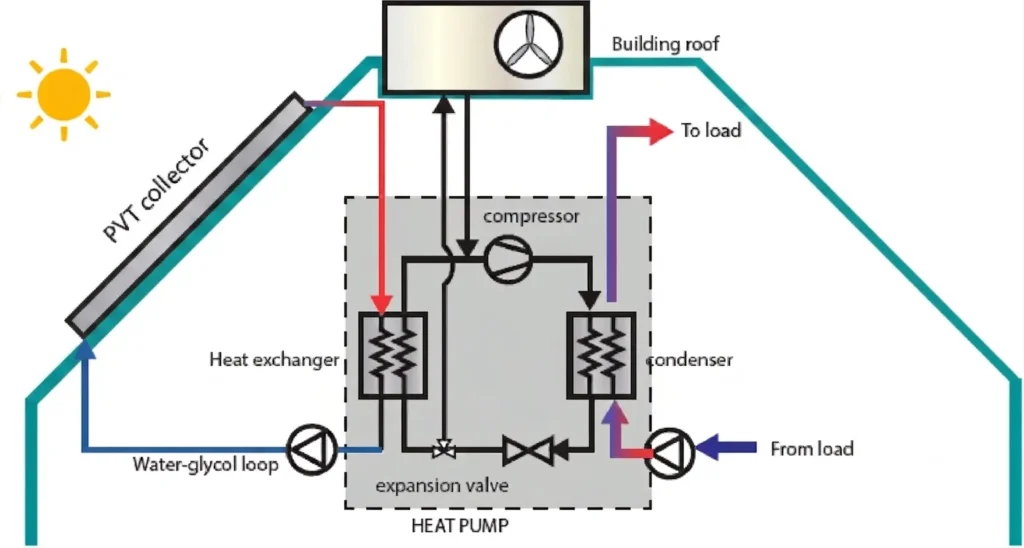
Improve Existing Air Source Heat Pumps

For properties already running an air source heat pump, PVT collectors can be retrofitted as a preheating stage rather than replacing the ASHP itself. Add renewable thermal input without replacing your existing heat pump. PVT collectors can support ASHP systems through preheating strategies that reduce compressor workload and improve seasonal efficiency.Depending on project layout and existing infrastructure, this is typically implemented in one of two ways: routing the PVT brine circuit through a heat exchanger ahead of the ASHP’s inlet to raise source-side temperature and reduce compressor workload, or connecting PVT output to a dual-coil preheating tank that warms domestic hot water before it reaches the ASHP’s heating coil.

Both approaches reduce the heat pump’s required work input during solar-favourable periods — improving the system’s effective seasonal performance — while the dual-coil tank route additionally preheats domestic hot water directly, independent of the ASHP’s operating cycle.

Applications include:

  • Existing ASHP Performance Upgrades
  • Heat Exchanger Preheating (Inlet Temperature Boost)
  • Dual-Coil Preheating Tank Integration
  • Reduced Compressor Workload During Solar Hours
  • Domestic Hot Water Preheating Alongside ASHP
  • Retrofit Projects Without ASHP Replacement
Diagram showing PVT brine circuit connected to a dual-coil preheating tank ahead of an existing air source heat pump

Option A: Dual-Coil Tank

Diagram showing PVT brine circuit routed through a heat exchanger to raise inlet temperature ahead of an existing air source heat pump

Option B: Heat Exchanger Preheat

Direct Expansion PVT for Heat Pump Source Integration

Direct expansion (DX) PVT systems use refrigerant-based thermal collection, with refrigerant circulating directly through the rear absorber behind the photovoltaic module — eliminating the intermediate brine loop and plate heat exchanger used in brine-based configurations. This direct refrigerant connection enables a more compact thermal transfer path between the collector and the heat pump’s refrigerant circuit.

This configuration is typically explored where installation space is limited, where system simplicity is prioritized over multi-source flexibility, or where a more compact mechanical footprint is required compared to brine-loop systems.

Diagram showing direct expansion PVT refrigerant circuit integrated with a heat pump system

Applications include:

  • Compact Solar-Assisted HVAC Systems
  • Space-Constrained Installations
  • Integrated Heat Pump Refrigerant Circuits
  • Residential Direct Expansion Retrofits
  • Light Commercial DX Applications

PVT as a Direct Replacement for Conventional Solar Thermal Collectors

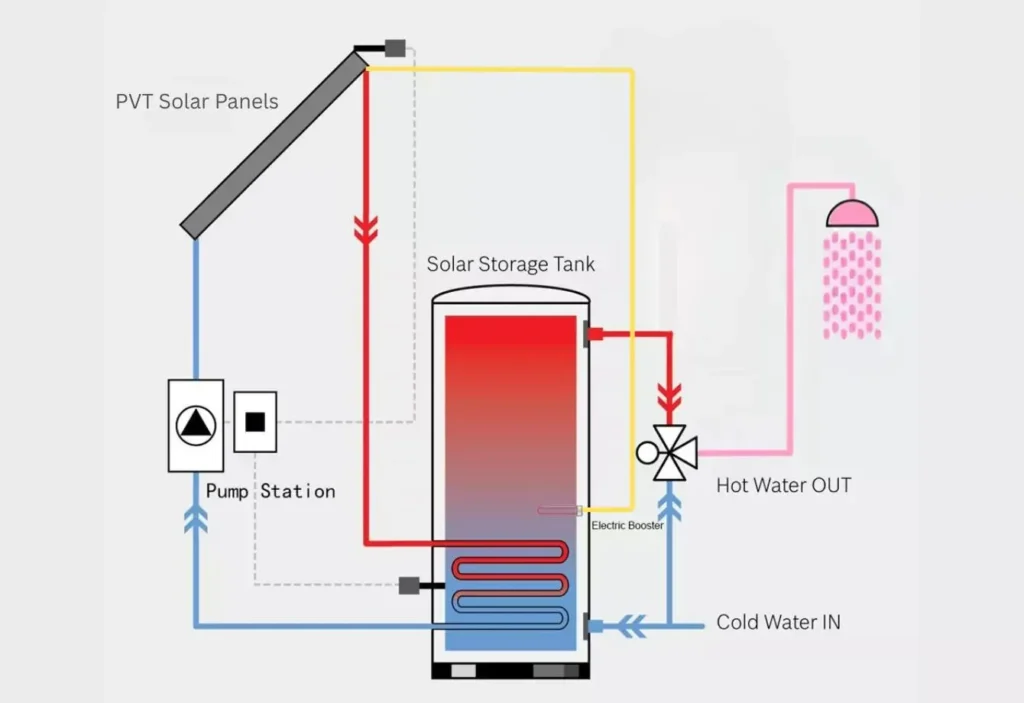
Beyond heat pump source integration, PVT collectors can also operate independently of any heat pump, with the brine circuit connecting directly to a conventional hot water tank or storage cylinder — functioning as a like-for-like replacement for standard solar thermal collectors. In this configuration, the PVT collector’s thermal output heats water directly through the storage tank’s heat exchanger coil, with no heat pump in the circuit.

The key distinction from a conventional solar thermal panel is the added electrical output: the same roof area that would otherwise produce heat alone now also generates electricity, while the continuous brine circulation across the rear absorber keeps PV cells cooler than a standard PV module under the same conditions.

Standalone hybrid PVT preheating system diagram, showing solar thermal input before boiler or heat pump

Applications include:

  • Conventional Solar Thermal Replacement Projects
  • Standalone Domestic Hot Water Generation
  • Hot Water Storage Tank Integration (No Heat Pump)
  • Combined Electricity and Hot Water Output
  • Residential and Light Commercial Hot Water Demand

Compatible with standard European brine-to-water heat pumps

Solis-PVT collectors use a standard glycol-brine circuit (G/W 25–35%) and Compatible with standard brine-to-water heat pump interfaces

Vaillant · Viessmann · NIBE · Daikin Altherma · alpha innotec · Bosch / Buderus · Stiebel Eltron · Mitsubishi Ecodan

Solis-PVT collectors use a standard glycol-brine circuit (G/W 25–35%) and are designed to interface with the brine inlet of standard brine-to-water heat pump systems via a plate heat exchanger, following common European hydraulic configuration practice. Exact connection requirements vary by heat pump model and system design. For a hydraulic schematic matching your specific heat pump make and model, contact us with your system details.

Where Solis PVT Is Used

PVT collectors integrated with a ground source heat pump system for borehole regeneration, geothermal heating support and seasonal thermal storage applications.
Ground Source Heat Pump Projects
Support geothermal heating systems with renewable thermal input for borehole regeneration, source temperature stabilization and long-term performance improvement.
PVT retrofit solution supporting an existing air source heat pump through a solar preheating circuit to improve efficiency and reduce electricity consumption.
Existing Heat Pump Upgrades
Add renewable thermal support to existing air source or brine heat pump systems without replacing major equipment.
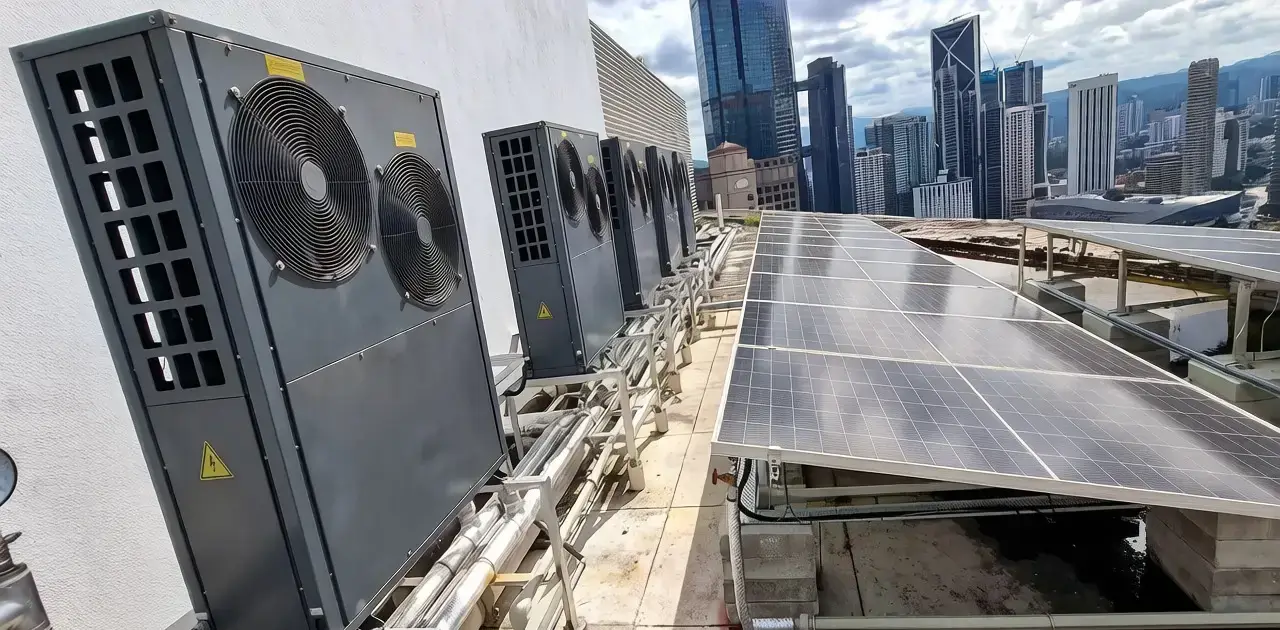
Commercial PVT installation providing renewable hot water and heating for hotels, apartment buildings and multi-family developments.
Hotels & Multi-Family Buildings
Large-scale PVT systems designed for domestic hot water, renewable heating and energy cost reduction in hotels, apartments and commercial buildings.
Direct expansion PVT collector connected to a refrigerant-based heat pump system for residential heating and domestic hot water production.
Direct Expansion PVT Systems
Direct refrigerant-based PVT collectors for compact solar-assisted heat pump systems with simplified thermal transfer architecture.

Selected PVT Heat Pump Projects

High-Rise Residential Project

High-Rise Residential Project

Brine PVT + Heat Pump

Hotel Renewable Heating Project

Commercial DX PVT

Ground Source Heat Pump Regeneration

Brine PVT

Frequently Asked Questions

A PVT panel combines photovoltaic electricity generation and thermal energy collection within a single collector structure.

PVT collectors can provide low-temperature thermal energy that supports heat pump operation in selected system configurations.

Yes. PVT is increasingly used in applications related to brine loop support and borehole regeneration concepts.

Lower Cost · Custom Specification Support · Faster Delivery · Strong Technical Support

Solis PVT is a cost-effective alternative to high-priced European manufacturers, with the flexibility to support project-specific collector specifications and faster lead times.

Yes. PVT systems are designed to simultaneously generate electrical and thermal energy.

Borehole regeneration refers to restoring ground temperature balance in geothermal systems using renewable thermal input.

PVT can be considered for selected retrofit projects involving existing heating systems or domestic hot water integration.

Traditional solar thermal collectors primarily produce heat, while PVT combines photovoltaic electricity generation with thermal collection.

Yes. PVT is commonly discussed in applications involving low-temperature renewable heating concepts.

PVT may contribute thermal energy for domestic hot water preheating applications depending on system design.

PVT is commonly explored in projects involving ground source, brine-based and solar-assisted heat pump systems.

Working on a heat pump project that needs a PVT source?

Send us your project details — building type, heat pump make and model, and approximate collector area — and we’ll come back with a hydraulic schematic, collector sizing, and an indicative price within 3 working days. We support indirect brine loop, dual-source, and GSHP regeneration configurations. Datasheets available on request.