
Frequently Asked Questions
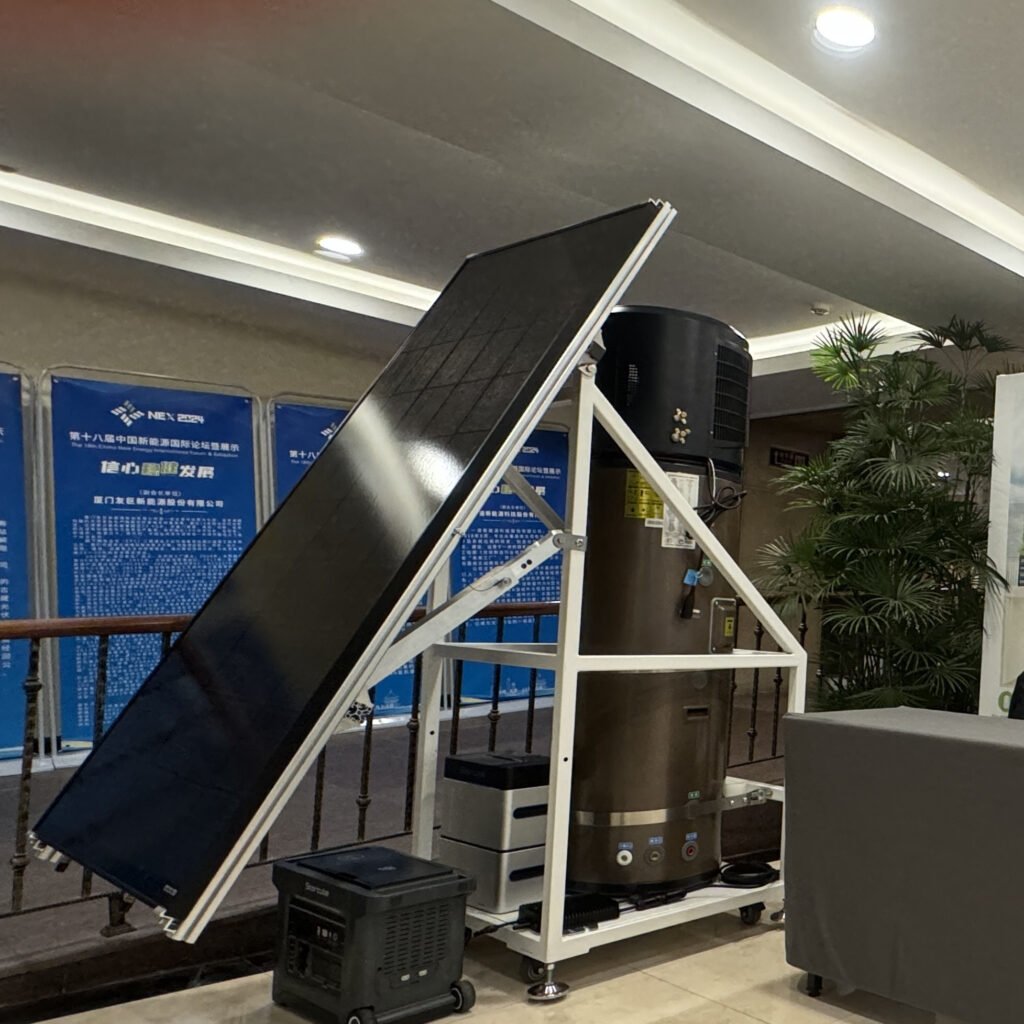
Direct expansion PVT combines photovoltaic electricity generation and refrigerant-based thermal collection within the same collector structure.
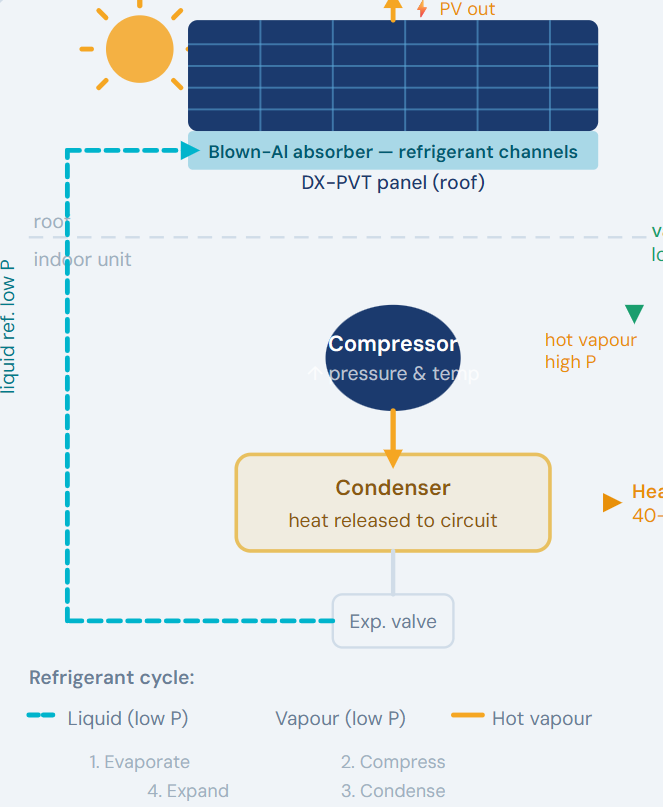
Refrigerant circulates behind the photovoltaic surface and absorbs renewable thermal energy directly from the collector.
Yes. DX PVT systems are designed to simultaneously produce photovoltaic electricity and thermal energy.
DX PVT is commonly discussed in solar-assisted heat pump systems and integrated renewable HVAC concepts.
Yes. DX PVT may be explored in residential renewable heating and cooling applications.
Yes. DX PVT can be integrated into selected hybrid renewable HVAC concepts.
DX PVT combines photovoltaic and thermal functions within one collector area, helping maximize roof energy utilization.
Without solar input, the panel absorber functions as a passive air-to-refrigerant evaporator — effectively a large, flat outdoor coil exposed to ambient air. The blown-aluminium surface has good contact with ambient air and sky radiation. At ambient temperatures above −10 °C, the system continues to operate as a conventional air-source heat pump with the panel array as the evaporator, typically delivering COP 2.2–3.0 depending on ambient temperature. Performance at night or in winter is lower than peak solar conditions but comparable to a similarly-sized ASHP outdoor unit.
DX PVT uses refrigerant as the heat transfer medium, while liquid-based PVT systems typically use water or brine.
The most common refrigerants for DX-PVT systems are R410A (existing installations, phasing out under F-Gas regulation), R32 (current mainstream residential heat pump refrigerant), and R290 (propane — natural refrigerant, low GWP, increasingly specified for European new installations). R290 requires specific handling and installation procedures due to flammability classification. The blown-aluminium absorber is compatible with all three; the compressor unit and refrigerant charge specification must match the chosen refrigerant. We supply panels compatible with R32 and R290 systems as standard.
Frosting on the evaporator surface occurs when surface temperature falls below the dew point of ambient air — a common issue with conventional ASHP outdoor coils. DX-PVT panels have several characteristics that reduce frost risk: the large, flat absorber surface with low air velocity contact reduces the intensity of frost formation compared to a finned-tube coil; solar irradiance during daylight hours prevents frost formation when irradiance is above approximately 100 W/m²; and the panel’s thermal mass delays temperature drop during defrost events. In most Northern European climates, panels installed at 30–45° roof pitch shed ice effectively. Severe frosting in cold, high-humidity conditions may require a defrost cycle similar to standard ASHP practice.
Yes, with a reversible heat pump cycle. In cooling mode, the refrigerant cycle reverses — the condenser becomes the evaporator (absorbing heat from the building) and the panel absorber becomes the condenser (rejecting heat to the roof and sky). This is less common in Northern European climates where cooling demand is low, but is a practical option in Central and Southern Europe. The ScienceDirect year-round field study referenced in the evidence section tested all three modes: heating, DHW, and cooling — confirming practical trifunctional operation of a DX-PVT system in a real building.
Roll-bond and blown-aluminium refer to the same basic manufacturing concept — an aluminium sheet with internal channels formed by inflating the material under pressure rather than by welding or bonding separate tube elements. The term “roll-bond” is commonly used in research publications, particularly from China, while “blown aluminium” describes the same product in European market terminology. Both result in a flat, lightweight aluminium absorber with distributed refrigerant channels and no welded joints in the refrigerant path. Our DX-PVT panel uses this blown/roll-bond aluminium construction.
For most new residential installations where the panel-to-compressor distance is under 15 m, DX-PVT is often the more efficient choice — fewer system components, higher COP, and no brine loop maintenance. If the panel array needs to be far from the indoor unit, or if the system needs to serve multiple circuits (DHW + space heating + pool + possible future GSHP borehole regeneration), brine PVT provides more flexibility. We assess both options for each project and recommend based on the specific building layout, heat demand, and roof configuration. Send us the project details and we will advise on the most appropriate system.