
Dual-Source Heat Pumps
Roof-Integrated Solar Evaporator
Direct-expansion photovoltaic thermal collectors designed to operate as an active evaporator source for modern heat pump systems.
Transform the Roof into a Heat Pump Energy Source
The SPVT Series combines:
- High-efficiency photovoltaic generation
- Refrigerant direct-expansion thermal recovery
- Heat pump evaporator functionality
- Roof-integrated renewable heat source design
Unlike conventional PV modules, the SPVT Series actively participates in the refrigeration cycle of the heat pump system

What Makes DX PVT Different?
Designed for Dual-Source Heat Pump Systems
Traditional hydronic PVT
Water / Brine,Water-Glycol Mixture / Antifreeze
PVT
↓
Brine Loop
↓
Buffer Tank
↓
GSHP
↓
Floor Heating
DX PVT
R410a/R290,Re frigerant Direct Expansion
This allows the panel to operate directly as: A heat pump evaporator
DX PVT Evaporator
+
Air Source Coil
↓
Dual-Source Controller
↓
Compressor
↓
Heating / DHW
Roof DX PVT
+
Outdoor Air Coil
↓
Electronic Expansion Valve
↓
Compressor
↓
Hydronic Heating System
DX PVT
+
Air
+
Ambient Heat
↓
Multi-source Evaporation
Why Use DX PVT?
Stable Winter Heat Source Support.
Even under low ambient conditions, the roof surface can still provide recoverable thermal energy through:
- Solar radiation
- Ambient heat
- Sky radiation
- Roof thermal accumulation
- Reduced Frostingn
More Than a Solar Panel.
The SPVT Series is not only a photovoltaic module. It is: A roof-integrated solar evaporator, designed for renewable heat pump systems.
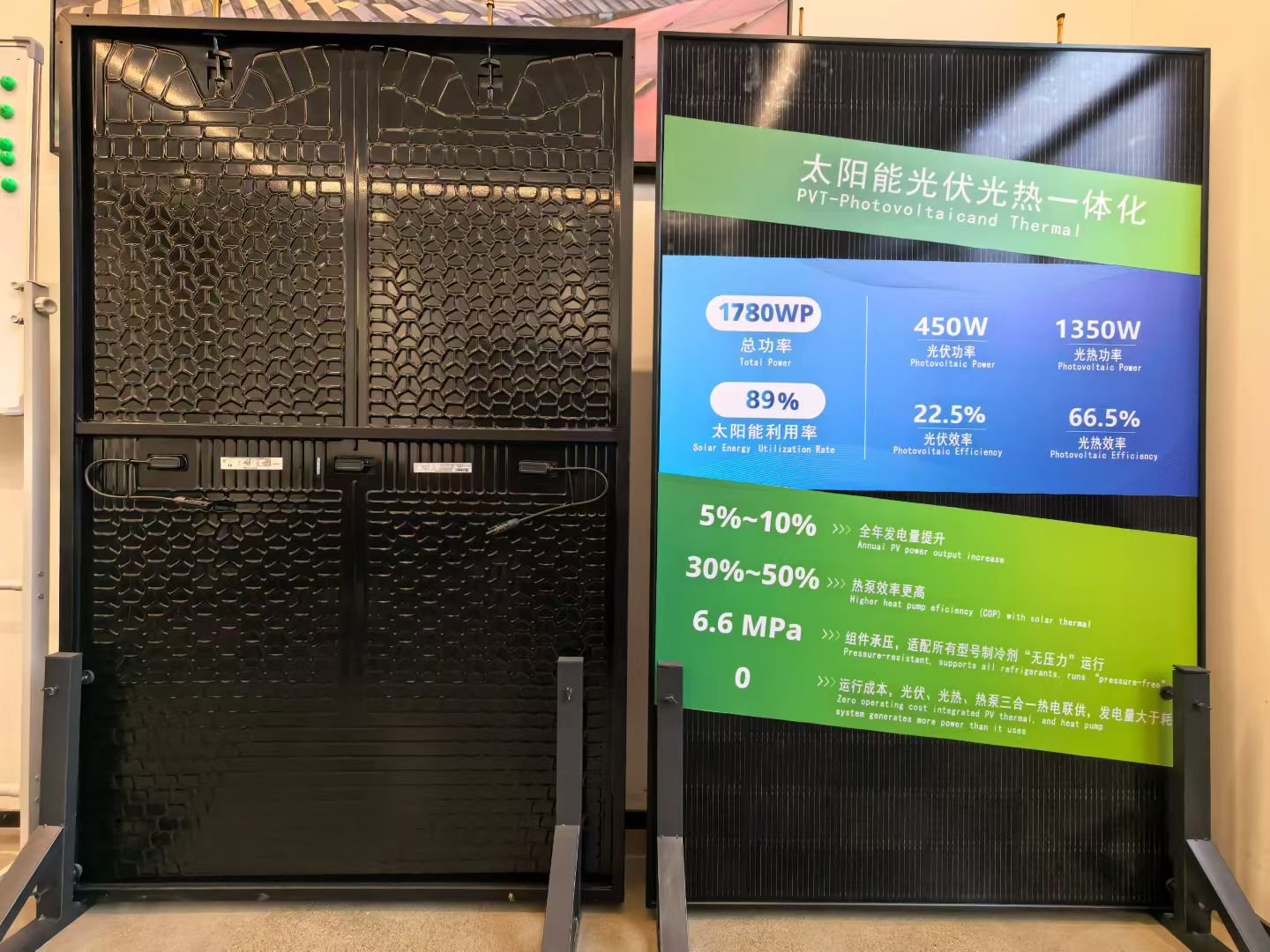
Reduced Frosting
- Frost accumulation
- Defrost frequency
- Fan runtime
- Winter efficiency degradation
Higher Heat Pump Efficiency
- Improved winter evaporation conditions
- Higher seasonal COP
- More stable compressor operation
Photovoltaic Specifications
| Parameter | Symbol | 450W | 455W | 460W | Unit |
|---|---|---|---|---|---|
| Output at STC | |||||
| Peak power (STC) | Pmax | 450 | 455 | 460 | W |
| Power tolerance | ΔP | 0 ~ +5 | 0 ~ +5 | 0 ~ +5 | W |
| Module efficiency | ηel | 22.5 | 22.8 | 23.0 | % |
Note on STC vs field performance: The NOCT of 42 °C — lower than a typical uncooled PV module (~44–48 °C) — reflects active refrigerant cooling of the cell rear during heat pump operation. Under field conditions with the refrigerant circuit active, cell operating temperature will be lower than STC projections, and actual electrical yield will exceed STC ratings by a measurable margin.
Thermal Output
1350 W from a single panel
The thermal figure represents the heat extracted from the roof environment and transferred to the refrigerant circuit under rated conditions. It is the energy input to the heat pump’s evaporator side — not useful heat delivered to the building.
| Parameter | Value | Unit |
|---|---|---|
| Thermal evaporation output (rated) | 1350 | W / panel |
| Refrigerant medium | R410a / R290 | — |
| Thermal inlet connection | 1/4″ Male Thread | — |
| Thermal outlet connection | 3/8″ Male Thread | — |
| Stagnation temperature (no flow) | 75.6 | °C |
| Operational temperature range | −40 ~ +85 | °C |
Evaporator function explained: Refrigerant enters the panel absorber channels as a low-pressure liquid and evaporates as it absorbs heat from the panel surface. The vapour then passes to the compressor. This is the same thermodynamic process as a conventional ASHP outdoor unit — the difference is that the heat source includes direct solar irradiation, which a finned air coil cannot capture. On sunny winter days, evaporation conditions can be significantly better than ambient temperature alone would suggest.
Mechanical Specifications
| Parameter | Symbol | Value | Unit | |
|---|---|---|---|---|
| Dimensions | ||||
| Height × Width × Depth | H×W×D | 1762 × 1134 × 35 | mm | |
| Weight | m | 35 | kg | |
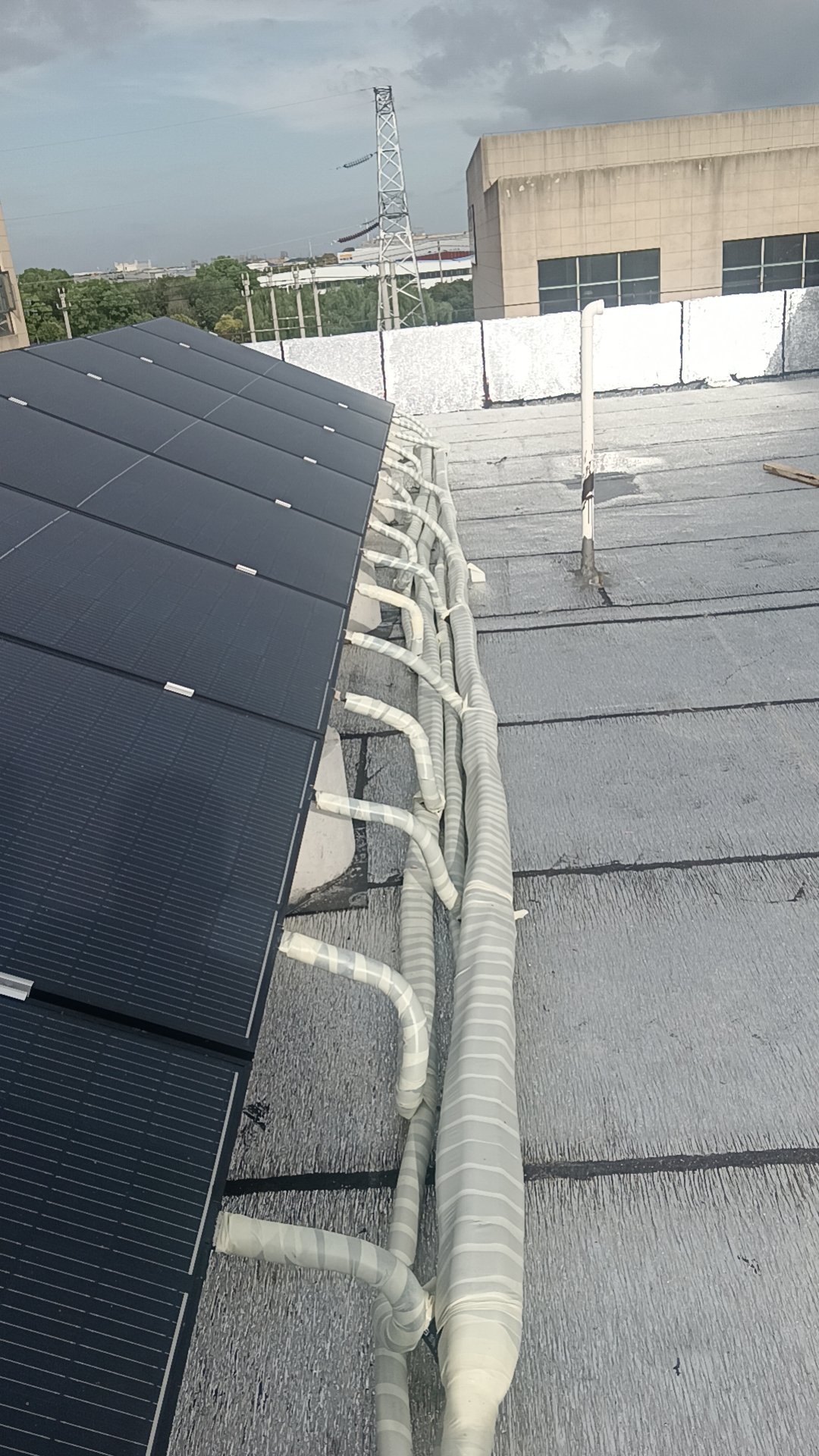
Typical Applications
Dual-Source Heat Pumps
Combine: DX PVT evaporator Air-source evaporator Intelligent source switching for optimized seasonal performance.
- DX PVT evaporator
- Air-source evaporator
- Intelligent source switching
- Lacinia taciti llitia
Low-Noise Heat Pump Systems
Reduce outdoor fan dependence and support quieter operation.
Renewable Heating Projects
- Residential buildings
- Villas
- Low-energy buildings
- Renewable retrofit projects
- Smart HVAC systems
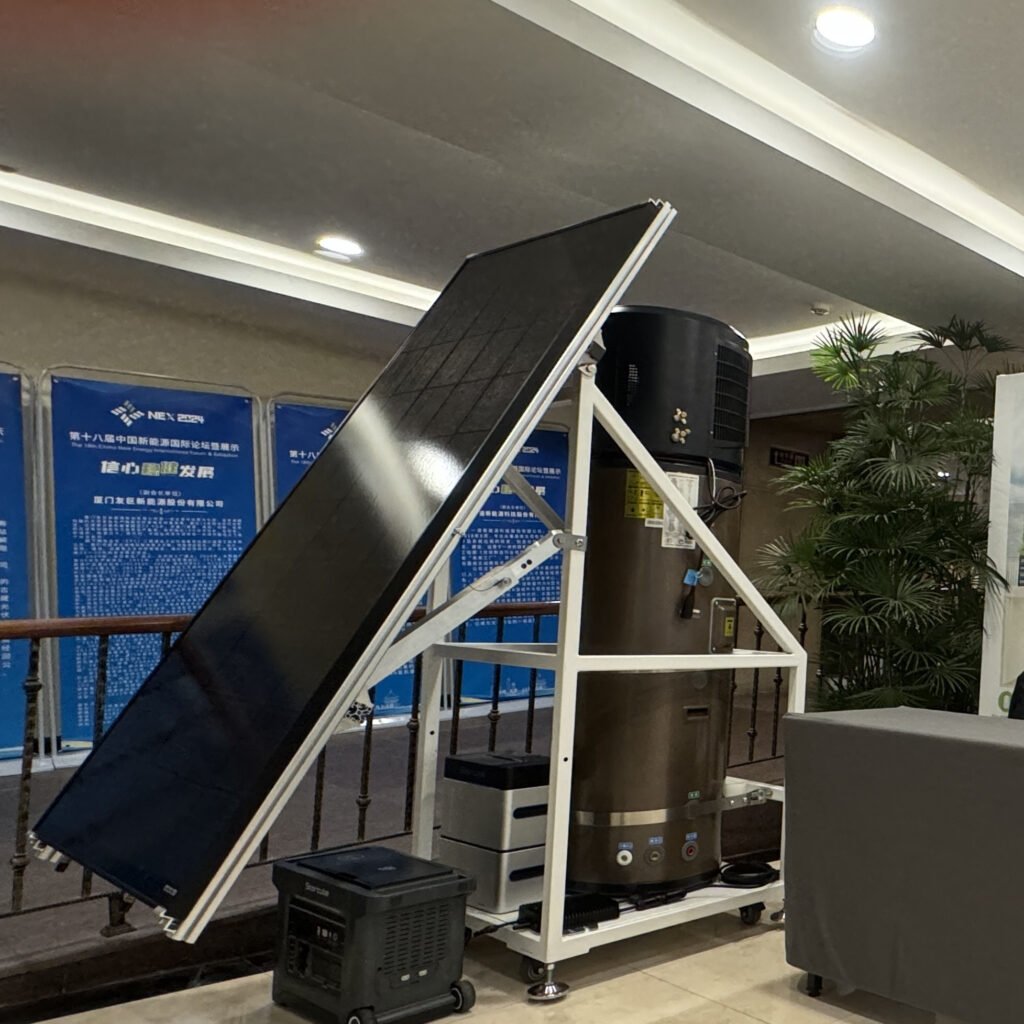
Direct Expansion Refrigerant Circuit
Product Features
The SPVT uses:
- Refrigerant direct-expansion architecture
- Blow-formed aluminum thermal structure
- Integrated evaporator functionality
- Roof-based thermal absorption
Roof-Integrated Energy Platform
Generate:
| Energy Type | Function |
|---|---|
| Electricity | Building power generation |
| Thermal Energy | Heat pump evaporation source |
Improved Roof Utilization
Generate electricity while simultaneously supporting heat pump operation.
Hybrid Source Compatibility
Compatible with:
- Air-source heat pumps
- Dual-source systems
- Hybrid evaporator configurations
Reduced Defrost Cycles
Support more stable low-temperature operation during winter periods.
Higher Seasonal Efficiency Potential
Improve evaporator source conditions and optimize compressor runtime.
The SPVT Series is designed for
Future of Heat Pumps
- The SPVT Series is designed for integration with:
Electronic expansion valve control
- Dual-source heat pump logic
- Refrigerant routing systems
- Variable operating conditions
- Low ambient evaporation strategies
As heat pump systems evolve beyond conventional air-source architectures, DX PVT technology enables:
- Roof-integrated evaporation
- Hybrid renewable heat sourcing
- Reduced winter performance degradation
- More stable low-temperature operation
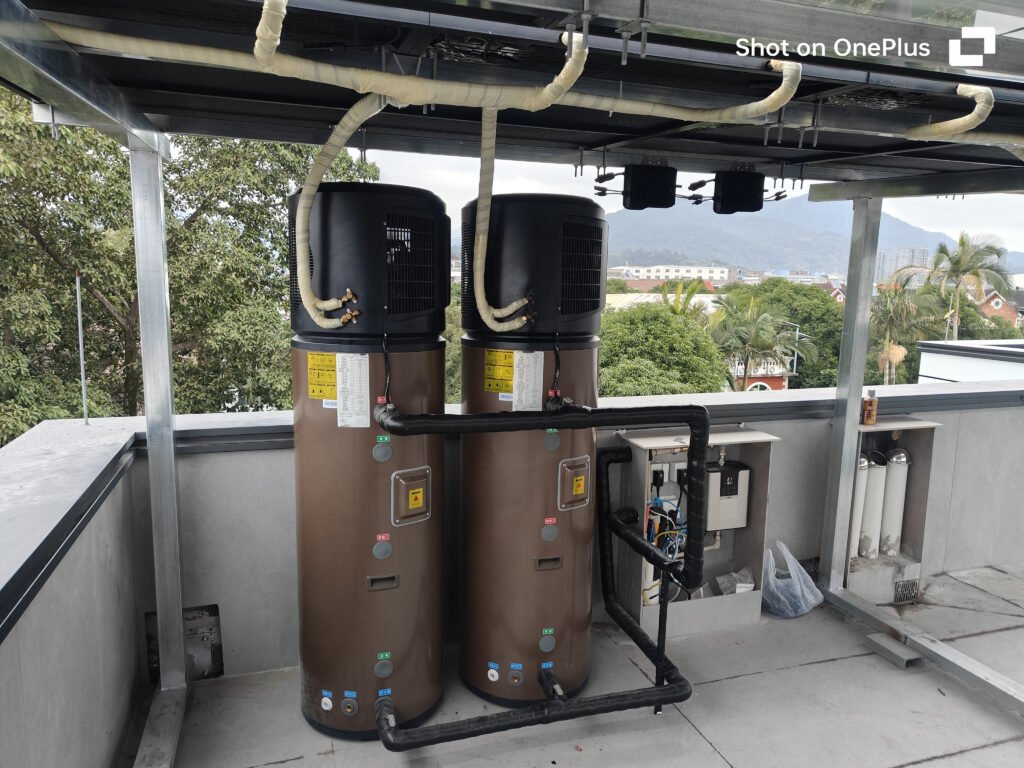
Important — F-gas regulation (EU 517/2014): Installation, commissioning, and servicing of refrigerant circuits using R410a or R290 in the EU requires a certified F-gas technician. R290 (propane) requires additional safety precautions due to flammability. Check local regulations before specifying refrigerant type.
Installation Notes
What installers need to know
Refrigerant connections
Refrigerant type
R410a or R290
Specify on order. R290 (propane) requires F-gas certified installer in EU. R410a is more widely available for field service.
Pressure test
6.6 MPa (factory tested)
Field pressure test per local refrigerant code before charging. Temperature uniformity test data available in full datasheet.
Heat pump compatibility
Dual-source or DX ASHP
Requires heat pump with a dedicated DX evaporator port or dual-source refrigerant circuit. Not compatible with indirect brine-only heat pumps without modification.
Pipe routing
2 roof penetrations per string
Refrigerant supply and return. Pipe insulation required to minimise heat gain/loss between roof and compressor unit.
System design required
Refrigerant charge + EEV sizing
Panel count, pipe run length, and compressor capacity determine refrigerant charge and expansion valve setting. We provide application notes on request.